
Modular vs. Welded Guardrail for Equipment Enclosures: Pros and Cons
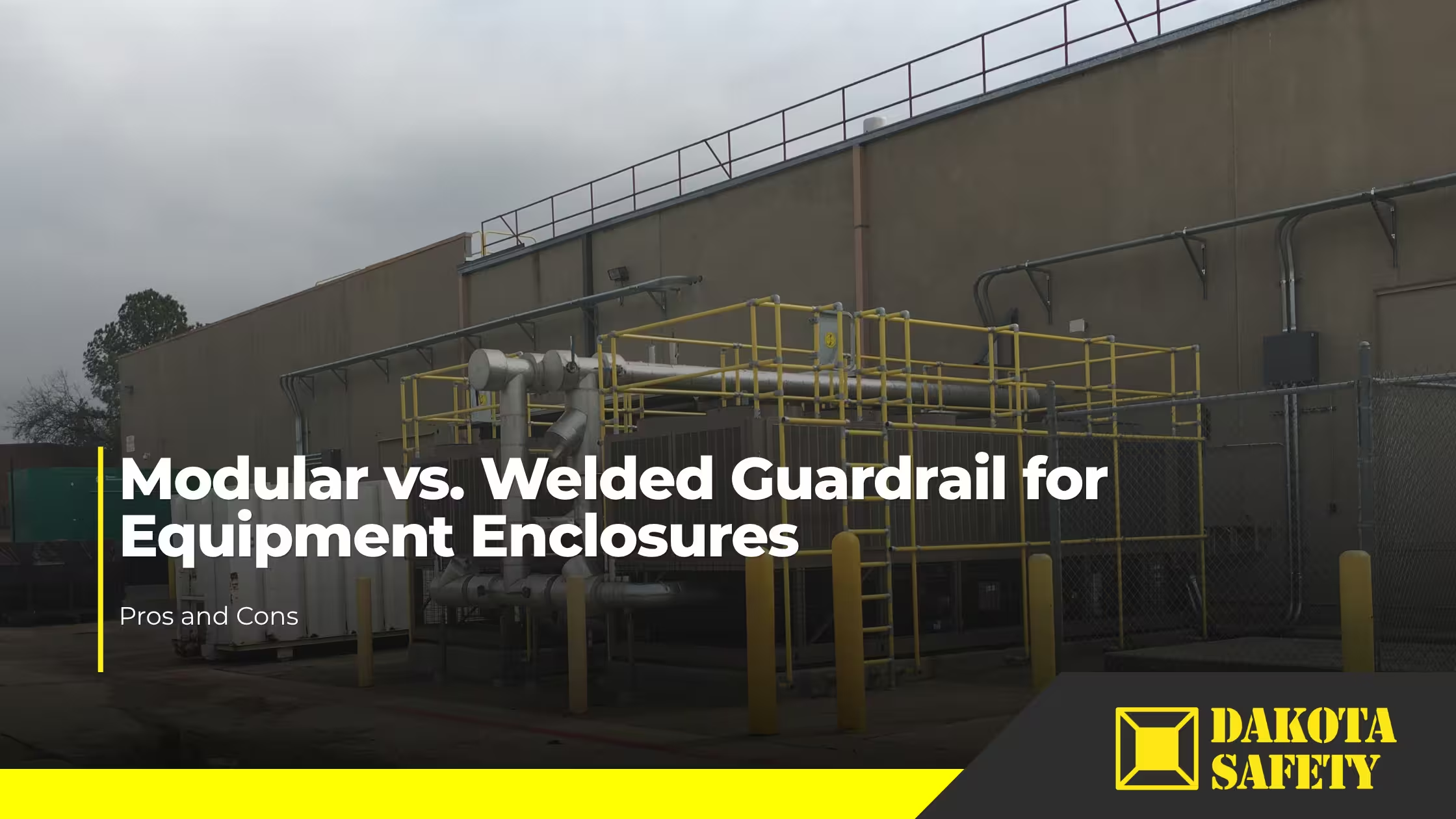


The chiller sits about nine feet off the deck. A technician needs the top of it twice a quarter to pull panels and check refrigerant. There is nothing up there to tie off to, because the chiller is the highest thing on the roof.
That is the problem an equipment enclosure guardrail solves. The real question is how to build it: a modular system that bolts to the unit's structural rails, or a custom welded cage fabricated for that one machine.
Both can be made fully compliant. The difference shows up everywhere else: install, downtime, warranty, and what you do the day the chiller gets replaced.
Quick answer: Modular and welded equipment enclosure guardrails meet the identical OSHA load and height criteria, so neither is "more compliant" by build method. Modular systems like EquipGuard bolt to the chiller's factory structural rails, install without hot work, and unbolt when the unit changes. Welded systems offer fully custom geometry and a permanent finish, and earn their place on fixed, never-moving installs.
The general-industry trigger that governs a chiller top is 29 CFR 1910.28(b)(1)(i): at four feet of exposure the duty to protect attaches, and a nine-foot unit clears that line by more than double.
The Hazard Is the Climb, Not the Roof Edge
Most rooftop fall protection content is about the perimeter. Equipment enclosures are a different animal.
The hazard isn't the roof edge. The hazard is the 9-foot climb to the top of the unit.
Once a worker is standing on the chiller, OSHA treats that surface like any other walking-working surface with an unprotected edge. The four-foot rule under 1910.28(b)(1)(i) applies, and a guardrail perimeter around the top work surface is the engineering control that answers it.
This is where the modular-versus-welded decision lives. Not on the membrane. On the machine.
Both Systems Meet the Same OSHA Bar
A modular bolt-together enclosure and a custom-welded enclosure are held to the same numbers under 29 CFR 1910.29(b). Construction method is not a compliance category. Performance is.
The top rail sits 42 inches above the work surface, plus or minus 3 inches. It must withstand 200 pounds of force applied within two inches of the top edge, in any outward or downward direction, without the top rail deflecting below 39 inches above the walking-working surface. The midrail takes 150 pounds, and openings stay under 19 inches.
A properly engineered modular system that passes those loads is exactly as compliant as a welded one that passes them.
Welded is not automatically stronger. Engineered is stronger.
What "Modular" Means Here
A modular equipment enclosure is built from structural pipe and fittings that bolt together. No field welding, no torch, no shop drawings for a one-off cage.
EquipGuard is Dakota Safety's modular enclosure for elevated equipment, built on Tractel's KwikGuard structural pipe-and-fitting platform. It attaches to the chiller's factory structural rails, never to the chiller body, and it never touches the roof. Because it only engages the factory rails and never alters the casing or frame, it stays inside the equipment manufacturer's intent and avoids the "you modified the unit" warranty argument.
A two-person crew installs it with a drill and a band saw, and install time scales with the size of the chiller. The rail reaches 42 inches above the top work surface and carries a 200-pound load capacity established through engineering analysis. Because the connections are mechanical, it comes apart with the same tools that put it up.
What "Welded" Means Here
Welded means custom-fabricated structural steel, cut and finished for one specific unit: a bespoke cage, not an off-the-shelf kit. It delivers fully custom geometry and a clean, permanent, one-piece appearance, a real advantage on a fixed installation that will never move.
The cost lives in the process. Field welding on a roof is hot work under OSHA 1910.252 and NFPA 51B. That means a written permit, a trained fire watch held for at least 30 minutes after the torch goes cold under OSHA (and at least 60 minutes in jurisdictions that adopt NFPA 51B), a 35-foot combustible clearance, and often a crane to set fabricated sections.
The Swap Test
When the choice is genuinely close, one question settles it. Will the equipment under this guard ever change.
Call it the Swap Test. Rooftop units get replaced: RTUs run 15 to 20 years, chillers 20 to 35, and the footprint rarely stays identical through a replacement. Each swap is a moment the guard has to answer for.
A welded cage that fit last year's chiller becomes scrap the day a differently-sized unit lands. You cut it out, grind it down, haul it off, and fabricate again. A modular enclosure unbolts, reconfigures around the new footprint, and goes back up with the same crew and the same tools.
If the unit will change, the Swap Test points to modular. If the install is permanent and a custom architectural finish is the priority, it points to welded. That is the honest answer, and we give it.
Modular vs. Welded: Side by Side
| Factor | Modular (EquipGuard) | Welded / custom-fabricated |
|---|---|---|
| Reconfigurability | Unbolts and reconfigures around a new unit | Cut out and scrap; fabricate again |
| Install method | Drill and band saw, no hot work, attaches to factory chiller rails | Field or shop welding, hot work in the process |
| Install time | Scales with chiller size, hand-tool assembly | Order to installed often runs weeks after drawings and approvals, longer if complex |
| Downtime / disruption | Low; no permit, no fire watch, no torch on a live roof | Higher; permit, fire watch, combustible clearance, often a crane |
| Equipment-change flexibility | High; built to come apart | Near zero; permanent by design |
| Load rating (1910.29(b)) | 200 lb top rail, 42 in. height, 39 in. deflection floor | Identical bar: 200 lb, 42 in., 39 in. |
| Warranty exposure | No cutting into the chiller frame | Welding/drilling the frame may affect equipment warranty |
The Hierarchy Behind the Choice
Step back from the build method and the decision is really about the NIOSH Hierarchy of Controls. A guardrail is an engineering control: the fall exposure at the chiller top does not go away, but the guardrail puts a physical barrier between the worker and that edge, protecting everyone who climbs the unit, on every visit, without anyone strapping into anything.
The alternative, active fall protection, depends on a harness, an anchor, training records, recertification, and a rescue plan, each a dependency that has to hold every time. A guardrail has no dependencies. It works at 2 AM when nobody is watching.
That is the Dakota Safety doctrine:
Engineer the hazard, not the worker.
How We Help You Decide
Dakota Safety assesses and specifies. We do not install, and we are not tied to one fabrication method or one product line.
We start with the chiller, not the roof: make and model, dimensions and aftermarket protrusions, service access, ladder placement, and any frame-mounted obstructions. We use high-resolution overhead imagery, including Google Earth Pro, to confirm how the unit sits on the roof before anyone climbs a ladder.
From there the recommendation falls out of the conditions. Most of the time that is a modular enclosure. Sometimes it is welded, and when it is, we say so.
Frequently Asked Questions
Are modular equipment guardrails as strong as welded ones?
Yes, when both are engineered to the standard. OSHA 29 CFR 1910.29(b) sets one bar for every guardrail: 42-inch height, a 200-pound top-rail load without deflecting below 39 inches above the walking-working surface, and a 150-pound midrail load. Strength is a function of engineering and testing, not whether the joints are welded or bolted. Engineered is stronger.
Are modular guardrails OSHA compliant?
Yes. OSHA's guardrail criteria are performance-based. Any system that meets the height, load, and opening requirements of 1910.29(b) is compliant regardless of how it is assembled. A freestanding, mechanically connected system that holds 200 pounds satisfies the standard.
Do I need a hot-work permit to install an equipment guardrail?
Only for welding or cutting. Field welding on a roof requires a written hot-work permit, a trained fire watch held for at least 30 minutes after work ends under OSHA (and 60 minutes where NFPA 51B is adopted), and a 35-foot combustible clearance under OSHA 1910.252 and NFPA 51B. A modular bolt-together enclosure produces no open flame and requires none of that.
Will an equipment guardrail void my chiller or roof warranty?
A modular system like EquipGuard attaches mechanically to the chiller's factory structural rails, so it does not cut into the unit or penetrate the roof. Welding or drilling into the chiller frame is a permanent modification that may affect the equipment manufacturer's warranty, which is worth confirming before any fabrication starts.
How long does a modular equipment enclosure take to install?
A two-person crew installs it with a drill and a band saw, and the time scales with the size of the chiller. A compact unit goes quickly; a large unit takes longer. Custom welded fabrication, by contrast, usually runs weeks from order to installed once you add shop drawings, fabrication, finishing, and hot-work coordination.
Can I move a modular guardrail when the equipment changes?
Yes. It disassembles with the same tools used to install it and reconfigures around the new unit's footprint. A welded enclosure generally has to be cut out and scrapped, then fabricated again for the replacement.
How much does an equipment enclosure guardrail cost?
Cost varies widely with chiller size, geometry, service access, and how many units you are protecting, so a single number would mislead. The most useful next step is a preliminary quote built around your actual equipment, which we provide at no charge with every line item shown.
When is a welded guardrail the better choice?
When the install is permanent and never-moving, the geometry is too irregular for a kit, or a spec calls for a custom welded appearance in a visible location. For most equipment enclosures, where the unit will be replaced within the system's life and the roof stays occupied during install, modular wins on speed, disruption, and flexibility.
Send us your roof plan.
We can typically turn around a preliminary quote within 48 hours, with every line item shown, including freight.
Call 866-503-7245
0 comments
Stay informed
Subscribe to get all the fall protection news and updates
Unsubscribe at any time